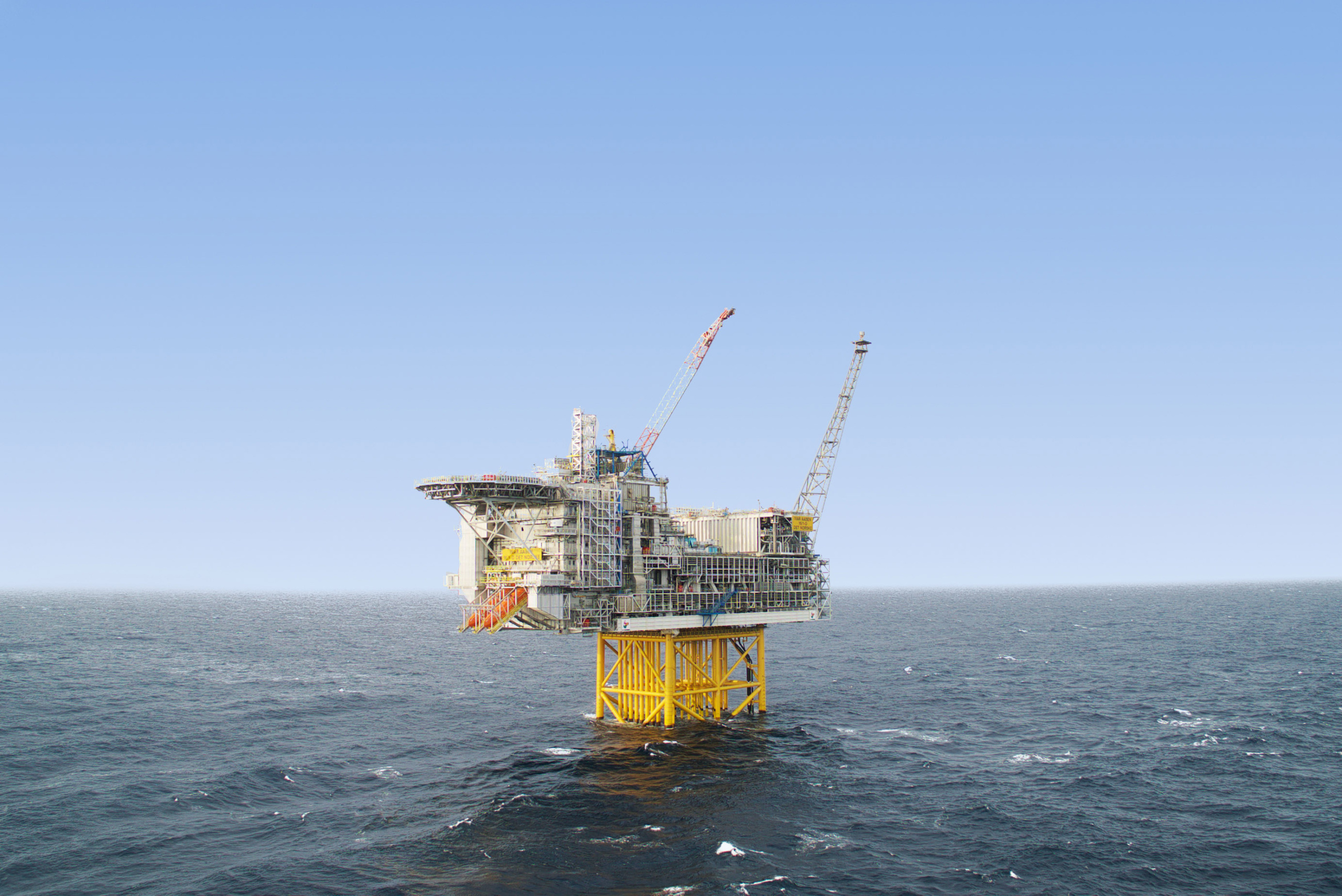
The Ivar Aasen field is located at the Utsira Height in the northern part of the North Sea, around 175 km west of Karmøy. The field was discovered in 2008 and was linked to previous discoveries in the immediate area. The plan for development and operation was approved in May 2013.
The first oil was produced on December 24, 2016, on time and within budget.
The Aasen field was a coordinated development with the Edvard Grieg field, which is located ten kilometers further southeast. Oil and gas are transported to the Edvard Grieg platform for final processing. From there, oil is exported to Grane Oil Pipeline, which is connected to the Sture terminal. The gas is exported in a separate pipeline to the British shelf. Ivar Aasen receives power from the Edvard Grieg platform, and will from 2022 receive power from shore from the Johan Sverdrup platform.
The recoverable reserves for the Ivar Aasen field are estimated at over 200 million barrels of oil equivalents.
DEVELOPMENT
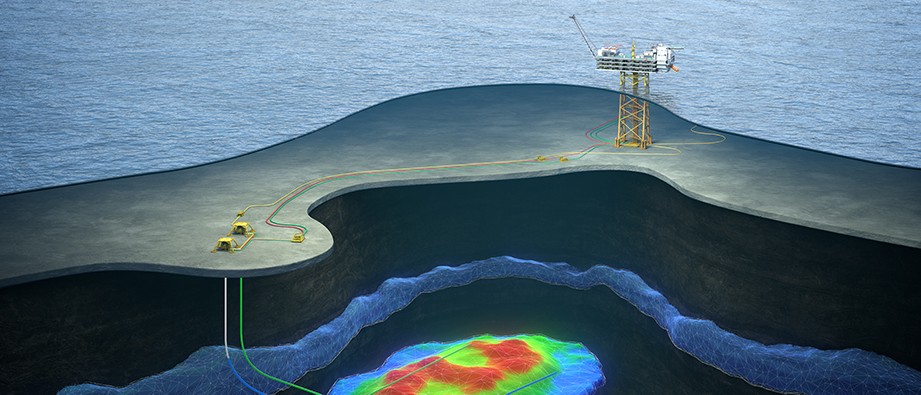
Ivar Aasen is a field in the northern part of the North Sea, 30 kilometres south of the Grane and Balder fields. The water depth is 110 metres. Ivar Aasen was discovered in 2008, and the plan for development and operation (PDO) was approved in 2013. The development comprises a production, drilling and quarters (PDQ) platform with a steel jacket and a separate jack-up rig for drilling and completion. Production started in 2016. The platform is equipped for tie-in of a subsea template planned for the development of the Hanz field, and for possible development of other nearby discoveries. First stage processing is carried out on the Ivar Aasen platform, and the partly processed fluids are transported to the Edvard Grieg platform for final processing and export.
RESERVOIR
Ivar Aasen produces oil from sandstone reservoirs. The field consists of the 16/1-9 Ivar Aasen discovery and the small 16/1-7 (West Cable) discovery. The reservoir in the Ivar Aasen discovery consists of fluvial sandstone of Late Triassic to Middle Jurassic age in the Skagerrak and Sleipner Formations and shallow marine sandstone in the Middle Jurassic Hugin Formation. The reservoir lies at a depth of 2,400 metres. It is compartmentalised and has moderate to good quality. Parts of the reservoir have an overlying gas cap. The reservoir in the West Cable discovery is in fluvial sandstone in the Middle Jurassic Sleipner Formation. It lies at a depth of 2,950 metres and has moderate quality.
RECOVERY
The Ivar Aasen reservoir is produced by pressure support from water injection. The West Cable reservoir is produced by pressure depletion.
TRANSPORT
Oil and gas are transported to the Edvard Grieg platform for final processing. The oil is exported by pipeline to the Grane Oil Pipeline, which is connected to the Sture terminal. The gas is exported in a separate pipeline to the Scottish Area Gas Evacuation (SAGE) system in the UK.
STATUS
Since production start-up, injection and production wells have been drilled and it is planned to drill new wells.
Digital pilot
Ivar Aasen is Aker BPs digital pilot, where new technology is applied and tested. The platform has a digital twin based on real-time data from Cognite. The technology helps reduce costs through performance analysis and optimization in the virtual environment.
Ivar Aasen was the first field where Aker BP equipped all operators on the platform with handheld digital devices. This provides paperless access to technical documentation and real-time information on equipment. The handheld devices contribute to more efficient and safe operation.